Piers Morgan Uncensored
 TalkOnPoint
Read the points below. Tap a timestamp to play it in the video above.
Context from the sourceWhat President Donald Trump described as a little excursion into Iran has now the economic impact has been felt worldwide with rising gas prices leading worldwide with rising gas prices leading to higher costs for goods and services
Context from the sourceSo what is wrong with that? Because I think President Trump sees that as think President Trump sees that as strength and not as weakness. unpredictable as a a real strength. Uh and you could make an argument that the
Context from the sourceWhat President Donald Trump described as a little excursion into Iran has now the economic impact has been felt worldwide with rising gas prices leading worldwide with rising gas prices leading to higher costs for goods and services
Context from the sourceWhat President Donald Trump described as a little excursion into Iran has now the economic impact has been felt worldwide with rising gas prices leading worldwide with rising gas prices leading to higher costs for goods and services
Context from the sourceunpredictable and unreliable often loses you leverage because others won't make a deal, won't adjust their behavior because they're not confident you'll Stephen, the 60-day time limit on the Iran US memorandum of understanding that
Context from the sourcecosts of this very intimate special relationship. Um, so I think you know relationship. Um, so I think you know it's now increasingly obvious that that that it exists no matter what these ministers say, no matter what Israel
Context from the sourcewith China if they lack confidence in uh the United States. Um, and so it's going to be a world that's somewhat more dangerous, somewhat uh less predictable, institutions that didn't solve all global problems, but helped manage many
Context from the sourcerest of the world? Let's get to the bottom line. What President Donald Trump described as a little excursion into Iran has now the economic impact has been felt worldwide with rising gas prices leading
Context from the sourcethe madman theory of foreign policy has woken everyone up. Donald Trump is the do, won't do. Has has woken it up and and doesn't that give America a bit of an edge that it didn't have? H doesn't this sort of get back and and say, "Hey,
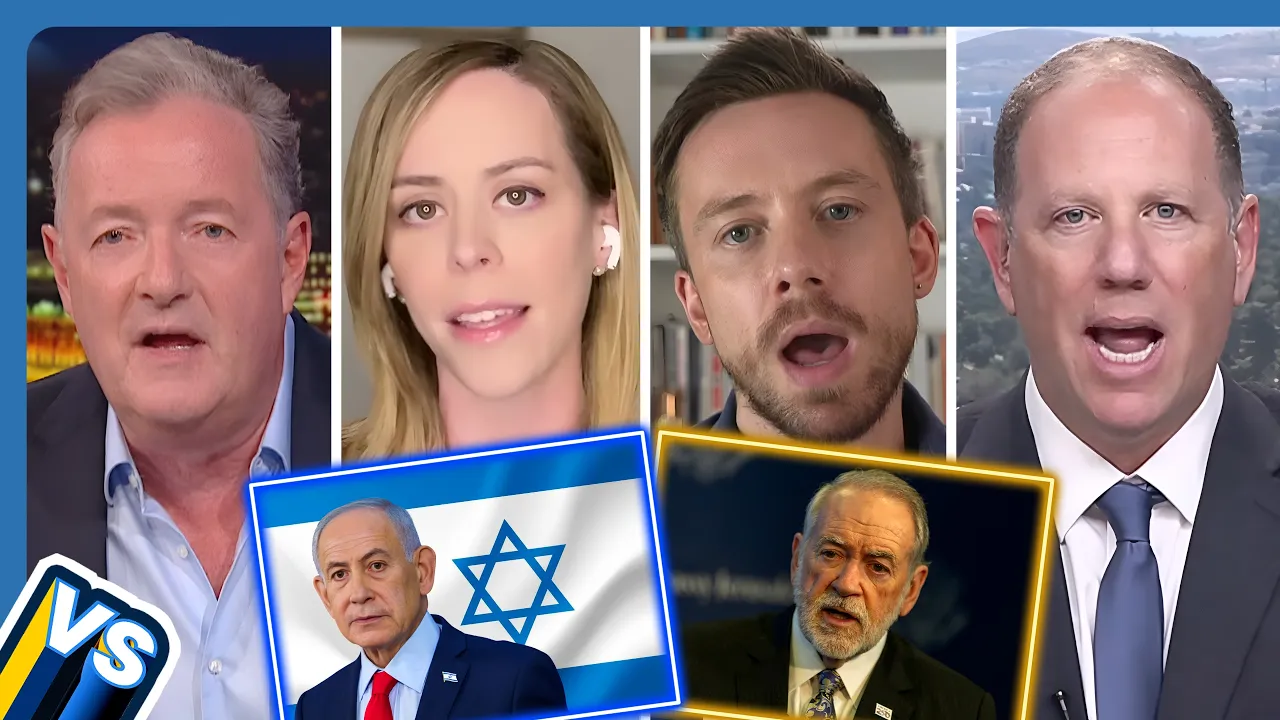
Context from the sourceother words, Israel played a key role in convincing Trump to make that decision, which in the minds of an growing number of Americans suggests some of the costs of this very intimate special relationship. Um, so I think you know
Central Thesis The ongoing conflict with Iran, largely influenced and perpetuated by the Trump administration’s alignment with Israel, is deeply undermining American global leadership and domestic standing. The war into Iran, initially perceived by Trump as a minor endeavor, has transformed into a costly quagmire that not only exacerbates economic hardships worldwide by raising gas prices and inflating costs but also erodes trust in U.S. leadership both internationally and domestically. This dynamic marks a broader erosion of American power, credibility, and foreign policy competence, risking a diminished global role amid rising competitors like China, while also straining critical alliances and America's reputation among its own population. Thesis Architecture The argument unfolds through a causal chain where: Trump's unpredictable and erratic foreign policy, especially the war on Iran, precipitates worldwide economic uncertainty, particularly through disrupted oil supplies and trade tensions. This economic strain diminishes Trump’s domestic popularity due to higher costs that impact everyday Americans, fueling political fatigue and skepticism toward leadership. Internationally, such unpredictability undermines U.S. credibility, reducing leverage in negotiations, notably with Iran, which treats the conflict as existential and thus more tenacious than the U.S. The special relationship with Israel, while strong, is becoming increasingly fraught and problematic domestically in the U.S. and internationally, fostering perceptions of American subservience and validating critiques of the alliance’s unconditionality. These factors collectively contribute to a weakening of U.S. global hegemony, with other nations like China gaining influence, and a shift toward a more multipolar, less predictable, and potentially more dangerous world order. The underlying assumptions are that sustained economic hardship reduces political capital for aggressive foreign ventures, that strategic credibility is critical to influence, and that alliances rest on mutual confidence and respect for international norms. Most Distinctive or Non-Consensus Insights One distinctive insight is that the administration’s “madman theory” of unpredictability, which some hoped would provide America with a strategic edge, instead severely undercuts U.S. leverage. Contrary to some expectations, unreliability diminishes willingness among allies and adversaries alike to trust U.S. commitments, hampering diplomacy. Another non-mainstream insight is the framing of the U.S.-Israel relationship as a liability rather than an unalloyed asset. The claim that the unconditional nature of U.S.
support is creating strategic costs and could lead to a “rupture” in relations is significant, particularly as growing American sympathy for Palestinians shifts political discourse. Lastly, the interview stresses that being technologically and scientifically strong underpins economic and, thus, national power. The Trump administration’s undermining of science and expertise represents a strategic failure, weakening the U.S.’s long-term competitive position. These insights deepen understanding by challenging common perceptions of American strength as primarily military and by highlighting the intricate interplay of domestic politics, alliance dynamics, and grand strategy. Main Topics and Supporting Observations U.S. Iran Conflict and Global Impact What started as a "little excursion" has become a protracted conflict with severe economic consequences worldwide. Neither Iran nor the U.S. wants to escalate, creating a "hurting stalemate," but Iran’s existential stakes outbalance American interests. Trump's unpredictability and lack of credible negotiation diminish U.S. influence in resolving the conflict. Trump’s Foreign Policy Style Trump’s erratic decision-making detaches from reality, creating chaos and exhaustion domestically and internationally. Mixed signals, such as trade wars hurting allies while demanding they spend more on defense, breed contradictions and weaken alliances. Domestic Political Consequences Trump’s approval ratings have sunk to historic lows partly due to economic pain and perceived self-dealing, exacerbated by the war’s costs. Public sympathy is increasingly shifting toward Palestinians, reflecting a broader reexamination of the U.S.-Israel relationship. U.S.-Israel Relationship Although close, the dynamic is increasingly strained, highlighted by controversial Israeli statements and policies condemned internationally. Growing domestic criticism within the U.S. appears, with political figures challenging the Israel lobby and questioning unconditional support. Israel may reverse some policies only under substantial political changes and international pressure, which currently seem unlikely. Long-term Global Power Shifts The U.S.
is losing relative power and influence due to mismanagement and self-undermining policies. China’s rise and the fracturing of international order signify a shift to a less U.S.-centric world, with more regional actors charting independent paths. The future will be more dangerous and unpredictable, diminishing existing global institutions' effectiveness. Predictions, Conditional Forecasts, Time Horizons, and Signals The interview forecasts a prolonged stalemate in the Iran conflict lasting likely beyond the immediate 60-day limits imposed by U.S.–Iran agreements, with neither side escalating but waiting for the other to yield. This could persist through Trump’s remaining two years in office. Domestically, decreasing support for Trump conditioned on persistent economic strain and war fatigue suggests political vulnerability in upcoming midterm elections, potentially leading to shifts in party leadership or policy direction. Internationally, if current trends continue—unpredictability, weakening alliances, scientific devaluation—U.S. global primacy will erode further over the coming decade, with China’s influence expanding and alliances fraying. Signals that could weaken these forecasts include: Major diplomatic breakthroughs with Iran or other Middle East actors that reduce conflict costs. A recalibration of U.S. foreign policy towards more consistent, multilateral engagement. Domestic political changes in the U.S. or Israel that promote moderation and renewed alliance trust. Strategic Implications For Israel and Jewish communities, the interview signals a potential turning point where unconditional U.S support may no longer be politically tenable, especially amidst growing American sympathy for Palestinians and international criticism of Israeli policies. This means increased scrutiny and pressure on Israel to alter its strategies in Gaza and the West Bank or risk isolation and the weakening of the special U.S.-Israel relationship. For U.S. policymakers, the lessons warn against relying on unpredictability as strategy, emphasizing the need to restore competence, coherent alliances, and credibility. Strategically, the U.S. should consider reducing its Middle East presence and redirecting focus toward Asia’s great power competition, thereby balancing resource allocation according to priority.
Globally, the erosion of U.S. power suggests a shift toward multipolar diplomacy, demanding new approaches for maintaining influence without traditional hegemonic dominance. Open Questions and Alternative Explanations Could there be internal U.S. political dynamics or external international shifts that abruptly change the trajectories described? Is the portrayal of Iran as “winning” the conflict universally accepted, or might there be underappreciated costs or internal pressures within Iran that could shift the stalemate? How might developments in science, technology, or domestic political leadership in the U.S. alter the decline in American soft power? Are there alternative foreign policy strategies that could reverse America’s weakening influence and create new global order alignments? Concise Research Summary Steven Walt critiques the Trump administration’s approach to Iran as emblematic of broader U.S. strategic decline. The Iran conflict has morphed into a costly stalemate, damaging the U.S. economy and political standing. Trump’s unpredictability undermines diplomatic leverage and alliances, notably straining relations with Israel, whose aggressive policies face growing American skepticism. The degradation of scientific investment damages long-term power, while the U.S. cedes influence to rising powers like China. Unless corrected by significant policy shifts and international pressure, these trends point to a riskier global order and diminished American leadership.
Recommended public analysis from TalkOnPoint