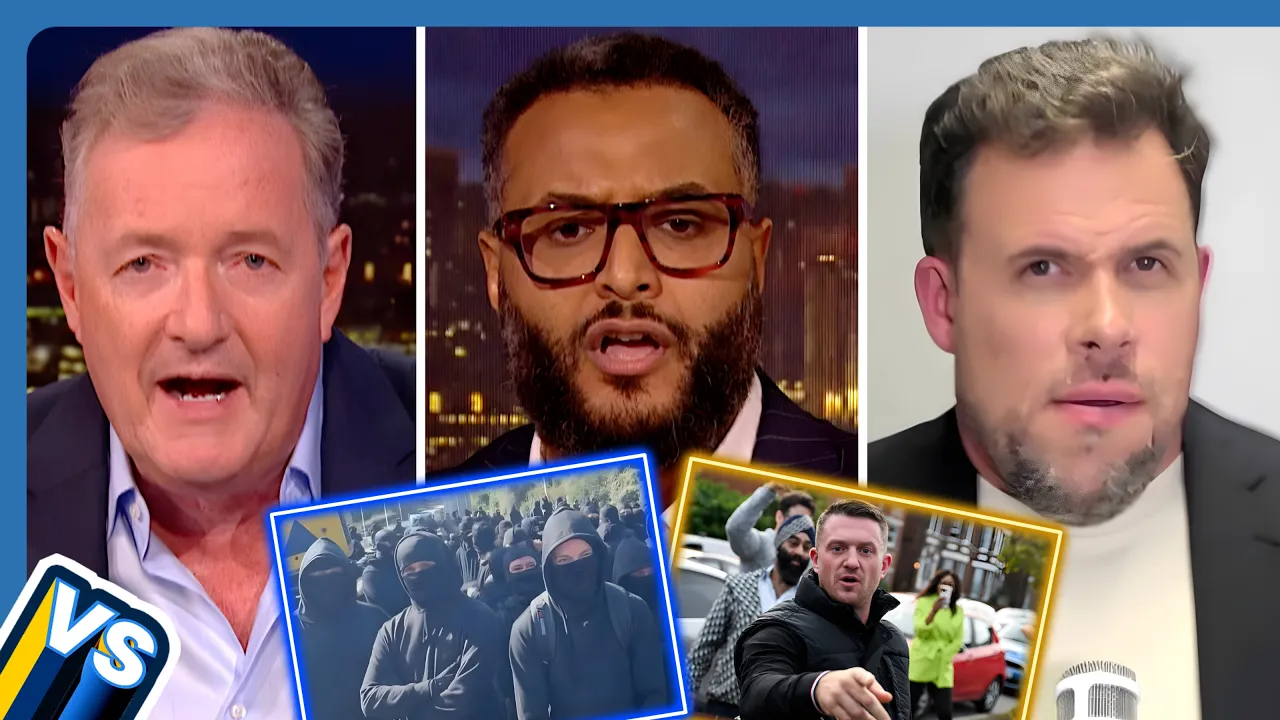
Piers Morgan Uncensored
 TalkOnPoint
Read the points below. Tap a timestamp to play it in the video above.
Context from the sourcesettlements at the aggressive rate the Israeli government's been doing, particularly since October 7th, what else are other countries supposed to do, just sit back and watch it? You know, I was in the West Bank exactly a year ago, and I saw the reality of a Palestinian
Context from the sourcethis Israeli government, fuelled by Ben-Gavir and Smodrich, two, in my opinion, despicable people, who absolutely, through their rhetoric and actions, believe in ethnic cleansing. I want to kick all the Palestinians out of Gaza, out of the West Bank. That is indisputable.
Context from the sourcewhen we are fighting for our life, Ed Miliband and the Labour Party choose the sanction, of all people, sanctioned, directly sanctioned, not the lip service, the Jews living in Judea because of the actions of a few hundred people. That is where they focus their energy. I don't
Context from the sourcethat there is ethnic cleansing of Palestinians in areas of the West Bank. Perpetrated by settler terrorists. And too often, the Israeli government has turned a blind eye to this.
Context from the sourceIsrael-friendly guy than Mike Huckabee, right? So if we take his word to be what it is, which was based on what he was told by Americans living there, that there are acts of terrorism being committed against the people on the West
Context from the sourceI think there are a few specifics here that need to be laid out. First of all, as Doron, I think, tried to explain, there's over half a million people who would be classified as settlers, including people who are in parts of Jerusalem, that would
Context from the sourcesort of hero. You have a Palestinian baby, Ali Dawabsh, who was burnt to death by Israeli settlers in 2015. Israeli settlers at weddings were picking up the picture of Ali Dawabsh and stabbing it with a knife in
Context from the sourceyour own head of MI5 and your heads of MI6 have acknowledged, Israeli intelligence has saved the lives of numerous Brits by terror attacks. I'm sure it has. And so why put that at risk at a time and accuse Israel who's standing against evil? I think it's foolish and I think the British
Context from the sourceIsrael personally in a phone call from the ruler of the UAE 10 days before the massacres of October the 7th. Benjamin Netanyahu, as he often does, has said it's all lies and he's taking legal action. Oddly, these legal actions never ever seem to actually appear in a courtroom.
Context from the sourceWhat you have is a policy by the Palestinian authorities in the West Bank in which they basically, anybody who's killed by Israel or imprisoned by Israel,
Overview This source is a complex debate involving Piers Morgan and others discussing the Israeli-Palestinian conflict, focusing on issues such as Israeli settlements in the West Bank, acts of terrorism by settlers and Palestinians, UK sanctions on Israel, and the political and ethical implications of these events. Central to the discussion is the argument over whether collective punishment of Jewish settlers in Judea and Samaria is justified, the legality and morality of Israeli settlement expansion, and the response of Western governments, particularly the UK, including accusations of antisemitism and criticisms of Israeli government policies. Main argument The debate presents competing views: one side argues that persecuting or sanctioning all Jewish settlers for the actions of extremist factions is unfair collective punishment, akin to what Israel is accused of doing in Gaza against Hamas, a terrorist group. Conversely, others contend that certain extremist settlers are committing acts of terrorism and ethnic cleansing, supported or ignored by the Israeli government, and therefore international sanctions and political pressure are warranted. The argument pivots on distinguishing individual responsibility vs. collective accountability and the legality of settlements under international law. The discussion also critiques the conflation of Jewish identity with the Israeli state, highlighting the dangers of equating all Jews with government policies. There is a focus on the UK government’s decision to sanction Israel based on allegations of settler violence and ethnic cleansing, complicated by the fact the UK Foreign Secretary, Ed Miliband, is Jewish, which adds nuance to accusations of antisemitism. Evidence and examples - Significant mention is made of a UK sanctions announcement by Foreign Secretary Ed Miliband that condemns settler terrorism and ethnic cleansing in parts of the West Bank. - Mike Huckabee, the US ambassador to Israel, is cited using the word "terrorism" to describe violent settler acts, a notable stance given his pro-Israel reputation. - Estimated half a million settlers live in areas including parts of Jerusalem, with several hundred extremists involved in violent acts.
- Specific incidents such as Palestinian baby Ali Dawabsh being burned to death by settlers and settler violence symbolized by stabbing his image were noted. - Israeli intelligence cooperation with UK agencies is referenced as an argument against damaging UK–Israel relations. - A report from Haaretz alleges Netanyahu was warned by the UAE ruler 10 days before the October 7th Hamas attack, which Netanyahu denies and threatens legal action against. - The discussion refers to payments by the Palestinian Authority to families of imprisoned or killed Palestinians, described as a "pay-for-slave" policy by critics but denied by Israeli spokesman representatives. - The UK government has set aside £116 million in aid to the Palestinian Authority, which critics say lacks accountability for incitement to violence. - Maps and territorial details (e.g., E1 settlement area of 12 sq km and Israeli control of the Jordan Valley) are debated to assess the impact of settlement expansion on the viability of a contiguous Palestinian state. Distinctive insights A key overlooked nuance is the pragmatic discussion about the internal Israeli political spectrum, where even supporters of Israel recognize extremist settler violence as terrorism but resist broad-brush condemnation of all settlers. The conversation also reveals the complexity of international allies balancing support for Israel's security with condemnation of policies viewed as counterproductive or oppressive. Another insight is the linking of UK domestic politics into its foreign policy decisions, suggesting that sanctions against Israel partially serve electoral or internal party motives rather than purely international justice goals. The distinction between opposing antisemitism and criticizing Israeli government actions is repeatedly emphasized to clarify political rhetoric. The debate highlights the paradox where accusations of antisemitism are sometimes weaponized to shield government policies from legitimate critique, which paradoxically risks increasing real antisemitism by erasing distinctions between Jews and the Israeli state.
Predictions and conditions The interview implies that unless the Israeli government takes meaningful action against settler extremism and expansion, international pressure and sanctions, including from democracies like the UK, will increase. Political leaders like Netanyahu face significant scrutiny, and unresolved allegations (e.g., foreknowledge of Hamas attacks) could damage their legitimacy. The effectiveness of sanctions and political condemnations remains uncertain and could have unintended effects, such as strengthening right-wing factions within Israel. The debate underscores that peace processes require Palestinian negotiations as well, and unwillingness on that front sustains the conflict. Signals that could weaken forecasts of increasing sanctions include Israeli government reforms addressing settler violence credibly, evidence disproving reports (e.g., about Netanyahu's foreknowledge), or shifts in Palestinian leadership readiness for peace talks. Practical implications The source suggests immediate consequences for diplomatic relations, such as potential strains between the UK and Israel, especially in intelligence-sharing and trade partnerships valued at billions of dollars. It encourages careful separation between criticizing Israeli policy and fostering antisemitism within Diaspora Jewish communities. The legal status of settlements remains a litigated issue internationally, reinforcing calls for targeted measures against settler violence rather than broad condemnation of all settlers. Media, governments, and activists are urged to use precise language distinguishing extremists to avoid inflaming ethnic tensions. The discussion also underscores the political necessity for Western governments to balance security cooperation with human rights concerns in Middle East policy, suggesting nuanced sanctions and conditional aid as tools. Caveats and open questions There is uncertainty around specific allegations, such as Netanyahu’s supposed advance warning from UAE leaders—a claim he denies and plans to litigate.
The extent and nature of settler violence vary greatly, and the size of extremist factions appears small relative to the wider settler population, complicating broad labels. The source presents polarized perspectives from Israeli government spokespersons and critics, often disputing facts about the Palestinian Authority’s "pay-for-slavery" policy, the nature of settler violence, and peace process failures. The motivations behind British sanctions are questioned as politically influenced rather than purely principled. The role of media framing and propaganda is highlighted but not exhaustively mapped, leaving open how much public opinion and political rhetoric shape the conflict’s international dimension. Key takeaways This debate elucidates the tension between condemning extremist violence by some Israeli settlers and opposing collective punishment of all Jewish residents of disputed territories. It reveals a complex interplay of international law, security concerns, ethnic identity, and political maneuvers within Israel, Palestine, and Western governments. The conversation stresses the importance of precise language to prevent dangerous conflations of Jews with Israeli government policies, warns against simplistic narratives around settlement legality, and exposes the fragility of diplomatic relations amid ongoing conflict. Ultimately, the discussion advocates for measured accountability for extremists, preservation of democratic values, and strategic policy decisions that facilitate peace without fueling ethnic hatred or political polarization.
Recommended public analysis from TalkOnPoint


